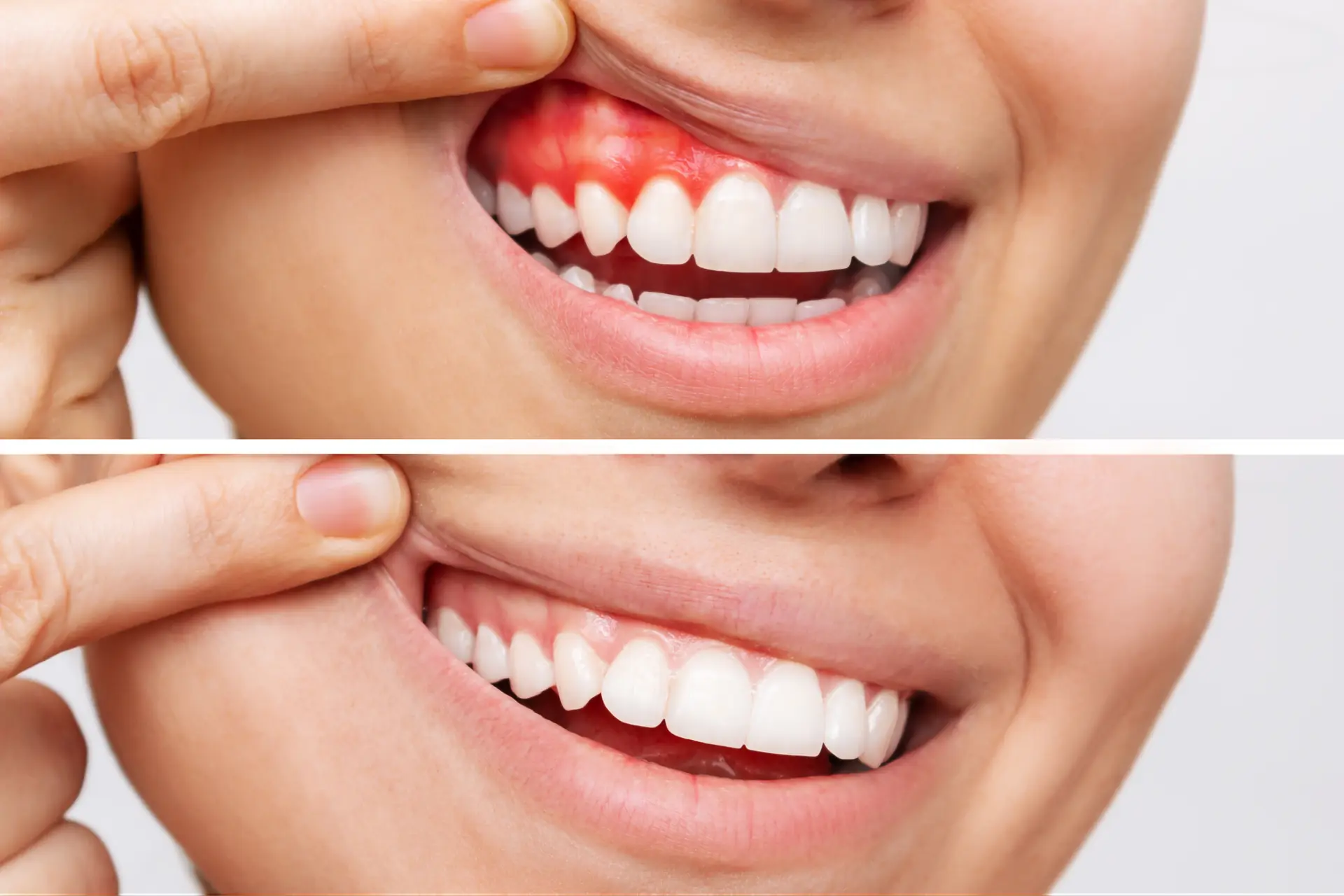
The foundation of healthy teeth lies in the gums—a component that is often overlooked. Bleeding during brushing, redness, or receding gums are not merely cosmetic concerns; they are the earliest signals of a process that, if left untreated, can lead to tooth loss. Periodontal treatments arrest this progression, safeguarding the supporting structures of your teeth while fortifying your overall oral health. Firm gums are the invisible pillars of a strong smile.
What is Gum Disease?
Gum disease begins when bacterial plaque accumulating on the tooth surface causes inflammation in the gums. In the initial stage, the gums become red, swollen, and bleed easily; this condition is known as gingivitis. If untreated, the inflammation advances to the supporting structures and bone surrounding the teeth (periodontitis). At this advanced stage, gums recede, teeth become loose, and may eventually be lost. Timely intervention prevents the condition from reaching this point.
Who is it Suitable For?
Anyone noticing bleeding, redness, or tenderness in their gums while brushing should prioritize an evaluation. Treatment is necessary for those experiencing gum recession, a feeling of elongated teeth, persistent bad breath, or loose teeth. Individuals with tartar buildup, smokers, diabetic patients, and those with a family history of gum disease fall into high-risk categories. Monitoring gum health is equally vital during periods of hormonal changes, such as pregnancy.
How is it Applied?
Treatment commences with a thorough clinical examination to evaluate gum health, the degree of recession, and supporting bone loss. The primary and most fundamental step involves scaling to clear plaque and calculus from both above and below the gumline. Root planing (deep cleaning) eliminates the bacterial reservoir from root surfaces. In advanced cases, additional minor surgical procedures may be required to access deep pockets. Aesthetic gum contouring can also be incorporated into the plan as needed.
Advantages
Timely periodontal treatment halts the trajectory toward tooth loss at an early stage. Resolving the inflammation eliminates bleeding, swelling, and bad breath. Protecting the supporting tissues extends the lifespan of your natural teeth. Furthermore, healthy gums provide a solid, predictable foundation for future cosmetic and restorative procedures. Improving overall oral hygiene also yields positive contributions to systemic health.
Treatment Process
The overall duration varies depending on the severity of the disease. While early-stage gingivitis may require only one or two cleaning sessions, advanced periodontitis demands multiple visits and systematic follow-up. Gum healing is monitored closely post-cleaning, and supplementary therapies are introduced if necessary. The ultimate success of treatment relies heavily on consistent home oral care. Routine maintenance visits are scheduled to prevent recurrence.
Recovery Period
Mild tenderness and temporary thermal sensitivity are common during the initial days post-treatment; these symptoms resolve quickly. Strictly adhering to recommended oral hygiene routines during recovery is decisive for long-term success. Following deep cleaning, the gums gradually firm up and regain their healthy appearance. Reducing or quitting smoking significantly accelerates tissue healing.
Frequently Asked Questions
- Is gum bleeding normal? No. Bleeding is almost always the first sign of gum inflammation and warrants immediate evaluation.
- Can receded gums grow back naturally? Advanced recession does not reverse on its own, but treatment can successfully stop further loss. In select cases, surgical aesthetics can restore volume.
- Does scaling (tartar removal) damage the gums? No. On the contrary, accumulated tartar is the primary culprit damaging the gums; scaling restores and protects periodontal health.
- Can gum disease cause tooth loss? Yes, in advanced stages. Untreated periodontitis leads to bone destruction, mobility, and eventual tooth loss.
- Could my bad breath be caused by my gums? Yes. Active gum inflammation and bacterial deposits are among the most frequent causes of chronic halitosis.
Do Not Neglect Your Gums
Healthy gums secure the future of your smile. Addressing symptoms like bleeding or recession early prevents complex issues down the road. Schedule your periodontal evaluation today to safeguard your oral health.