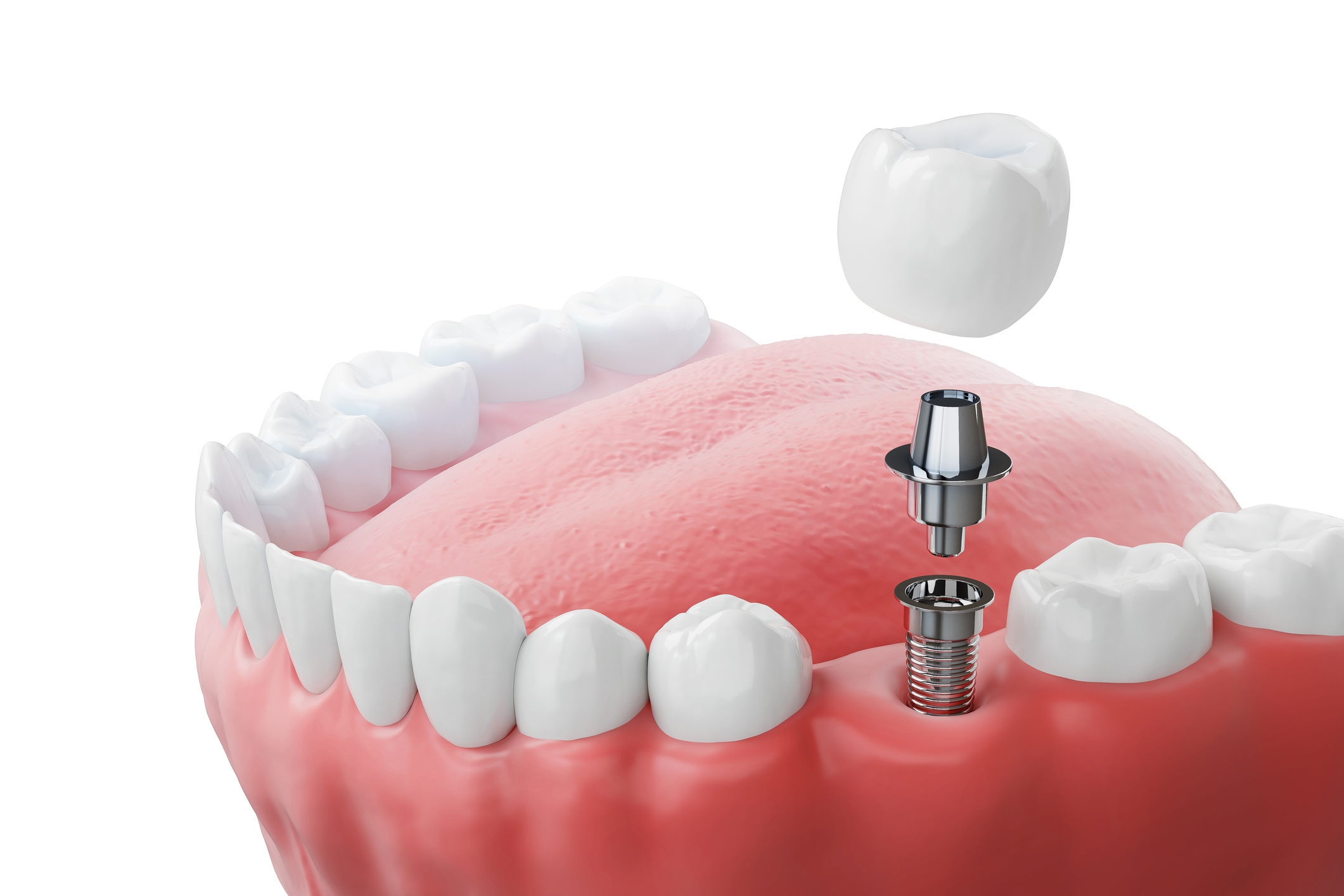
Losing a tooth is not merely an aesthetic issue; it also affects your chewing capacity, speech, and over time, the health of your jawbone. Dental implants offer the closest solution to natural teeth by replacing both the root and the crown of the missing tooth. Their fixed, strong, and long-lasting nature makes them the gold standard for missing teeth. Whether you are missing a single tooth or multiple teeth, you can regain your former chewing comfort thanks to implants.
What is a Dental Implant?
A dental implant is an artificial tooth root shaped like a screw, made of titanium or similar biocompatible materials, placed into the jawbone to replace a lost tooth. It fuses with the bone to form a sturdy foundation; the crown or prosthesis placed on top assumes the function and appearance of a natural tooth. Because it stands independently without needing support from adjacent teeth, it causes no harm to healthy neighboring teeth. In this respect, it differs from traditional methods like bridges.
Who is it Suitable For?
Adults who have lost one or more teeth and whose overall health is suitable for the procedure can benefit from this treatment. It is ideal for those who use removable dentures and desire a more fixed solution, as well as those who do not wish to grind down healthy teeth for a bridge. Having sufficient jawbone density is important; if bone volume is inadequate, bone grafting (augmentation) can be applied beforehand. Since uncontrolled diabetes, severe systemic diseases, or heavy smoking can affect the process, suitability is determined during an examination.
How is it Applied?
Treatment begins with a detailed examination and digital imaging; the structure of the jawbone is evaluated in 3D, and the implant's position is planned. During the procedure, the area is numbed, and the implant is placed into the jawbone; the process is much more comfortable than most patients expect. Next, a healing period is required for the implant to integrate (osseointegrate) with the bone. Once fusion is complete, a custom-made crown or prosthesis is attached to the implant, concluding the treatment.
Advantages
Implants provide chewing power and feeling almost identical to natural teeth; being fixed, they do not move or require removal. Because they do not touch neighboring healthy teeth, they preserve their lifespan. By replacing the tooth root, they slow down jawbone resorption and contribute to maintaining facial contours. Aesthetically, they look completely natural, giving you confidence in your speech and smile. With proper care, they can last for many years.
Treatment Process
The process spans several stages. During the first appointment, planning and imaging are conducted. The placement of the implant is completed in a single session. Afterwards, a few months are usually required for bone fusion; this duration varies based on the bone structure and the treated area. Once fusion is achieved, impressions are taken, and the upper structure (crown/prosthesis) is prepared and placed. In cases requiring bone grafting, the total timeframe may extend slightly.
Recovery Period
In the first few days following implant placement, mild swelling or tenderness in the area is normal and subsides quickly. Adhering to the simple care instructions provided by your dentist facilitates healing. Preferring soft foods and avoiding putting stress on the area during the initial phase is recommended. The crucial stage is the waiting period during which the implant quietly fuses with the bone; attending regular check-ups during this time is the key to success.
Frequently Asked Questions
- Is getting a dental implant painful? Because the area is completely numbed during the procedure, no pain is felt. Any mild discomfort afterward can easily be managed with simple measures.
- How many years does an implant last? With proper care and regular check-ups, implants can last for many years, and in most cases, a lifetime.
- Can an implant be placed for every missing tooth? In most cases, yes. If there is insufficient jawbone, bone grafting can be performed prior to implant placement.
- How long does implant treatment take? Due to the bone fusion process, treatment usually spans a few months. The total duration varies individually.
- Do implants harm the body? Implants are manufactured from biocompatible materials and are fully compatible with the body. With proper planning and care, it is a safe treatment.
Complete Your Missing Teeth with a Fixed and Natural Solution
Delaying the treatment of missing teeth can lead to jawbone loss and problems with neighboring teeth over time. Dental implants restore your chewing comfort with a permanent and natural solution. Schedule an examination appointment to evaluate your condition and create a personalized treatment plan.